
Archive for the ‘Bioenergy’ Category

Is algae the deep slimy future for biofuels?

Friday, October 5th, 2007

Let’s face it; the record on conventional biofuels as a carbon-reducing, environmentally friendly, energy security-enhancing, cost-effective solution has come in for an absolute battering in recent months. And that’s not altogether unfair. Food prices have risen because the feestocks are not quickly scaleable, the rainforests in Borneo are being decimated to grow palms, no one will ever be oil price independent from instability in the Middle East (especially a WMD exchange between Israel and . . . take your pick) and oil prices are still going up.

So enter the slimy, green stuff.

When I look at this, I see a failed pond. Oxygen poor, virtually lifeless. But algae likes that. Alternative energy enthusiasts are intrigued because the energy density of algae is much greater than crude. Algae can also be refined to make petrol, diesel, jet fuel, and chemical feedstocks for plastics and drugs.

There is as yet though, no listed stock - according to AEI criteria - in the business of algae. Just this OTC stock, Global Green Solutions, which is mentioned in this article here. I suspect that will change in the next few years. And the dream is to connect a coal plant’s CO2 emissions to an algae pond - this project here in New Mexico believes a 1 acre algae pond can absorb between 258 - 450 tons of carbon dioxide a year. It does seem though that we need a lot more enhanced genetic engineering of the enzymes to make this a large scale commercial reality.
Jatropha curcas - can it deliver?

Friday, September 14th, 2007

Certainly D1 Oils plc think so. Their plan is to exploit Europe’s high demand for biofuel by producing oil from jatropha seeds. They (rightly, in my view) doubt that Europe’s rapeseed and waste oil can plug the gap. And they have also managed to attract the interest of oil giant BP. As this article says, jatropha is so tough, it can ” . . . grow in tropical and subtropical wastelands . . . deserts, garbage dumps and rock piles, where food crops wouldn’t stand a chance. Moreover, it’s a low-maintenance shrub, needing about 600 mm of water, but which can survive three years of drought by dropping its leaves“.

Ok, but it’s always worth examining the sceptical side of any investment story. And this piece here Jatropha: Too much hype on little known plant from the Philippines does a pretty good job. It questions, citing experts, how quickly after plantation commercialization can be achieved, the yield in kilos per hectare and oil content in percent in Philippine conditions.

Still, with D1 BP’s joint venture getting set to plant one million hectares and an estimated 300,000 hectares per year thereafter, we’ll find out soon enough how effective Jatropha really is.

Helius Energy - the biomass electricity play

Wednesday, May 16th, 2007

Helius Energy, our sole biomass stock, today rose on news that has appointed McBurney Corp and Morgan Est PLC to carry out pre-engineering work on its flagship 65-megawatt biomass power plant in Stallingborough, Lincolnshire.

Pre-engineering work incidentally includes combustion trials, confirmation of the biomass fuel mixture, and front-end engineering design work and will take around 20 weeks to complete.

All biomass is ultimately powered by the Sun, so it’s reasonable enough to call yourself Helius if biomass is your business. One of the company’s core beliefs and drivers is “. . . that by 2050, biomass could provide as much as 50% of the world’s primary energy needs. And the next decade will see the development of improved biomass energy conversion systems – with Helius Energy destined to be at the forefront.”

That would suggest an enormous growth rate from where we are now, not least for biomass-fired electricity (a secondary energy derivative). Today it is a very tiny proportion of electricity production - according to this wiki, just 44 GWH were generated in 2005, less than half the 93 GWH produced by solar pv.

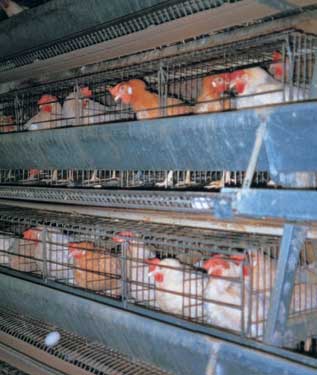
I do have my doubts about biomass power for developed nations - perhaps wrongly. I can see it making sense in India, but other than a lifestyle choice for remote rural types, it’s not an obviously commercial solution to the large, clean and environmentally friendly (clear air and carbon free) emissions of a modern, wealthy, urbanised society. Unless of course, they can tap into a massively cheap feedstock - like chicken manure !

Biomass feedstock anyone?

Not just eggs but electricity!

This is what the world’s largest biomass plant at Thetford runs on.

Ethanol sector preview

Friday, July 21st, 2006

A very interesting piece here which explores the ethanol stock universe and some of the surrounding issues in the industry according to analysts.

Of particular note is the current fragmentation of the ethanol market. ADM (Archer Daniels Midland), the biggest, is the only producer with double-digit market share - that’s according to Merrill Lynch analyst Diane Geissler.

And Bear Stearns analyst Ann Duignan said she noticed attendees at a recent industry workshop seemed to recognize that rising corn prices and falling ethanol futures indicate tougher margins ahead.

Clean Air Power - combining diesel with gas

Thursday, July 13th, 2006

Clean Air Power which closed today at 86.5 has the technology to combine gas with diesel. Petrol or gasoline dual fuel systems are quite common - I have one myself on my car. But with diesel it is just not done. That’s what makes this company’s technology unusual as well as the fact that it is geared to the US freight market, whereas LPG and dual fuel LPG tend to run off domestic cars.

Xethanol - the non-corn USA ethanol play

Thursday, July 13th, 2006

Amex-listed Xethanol closed down today at 8.79.

The company is unusual in that it’s philosophy is to make ethanol not out of America’s corn - concentrated in the Midwest. They think the demand for ethanol is actually on the Atlantic, Gulf and Pacific coasts many thousands of miles away. iInstead, their approach is to produce ethanol as near to urban centres as possible with local biomass. Take the waste to the solution, not the solution to the waste is their marketing soundbite.

In recent months, the company has been as high as 16.18. And of interest is that they are diversifying into biodiesel.

China Biodiesel International making quiet gains after IPO

Monday, July 10th, 2006

One week after its IPO, China Biodiesel International, a company that makes biodiesel - profitably - from waste oil closed up today on London’s AIM near 2% at 106p. This waste oil is collected by suppliers and includes old cooking oil, expired oil from grain depots waste oil from animal fats. The company has 16 suppliers both local and national. It also imports waste palm oil from Malaysia.

Some people - like NY Times columnist Thomas L. Friedman - believe that China will be forced to become the first country to go green on a massive scale. Although the Chinese economy is growing at 10% p.a., some figures suggest it is losing 2% from environmental damage.

See these video clips of a seminar with Friedman and Senator Luger that discuss this and other issues.

Is ethanol the new real estate?

Monday, July 10th, 2006

Certainly, this article in the NY Times seems to think so, based in no small part by the successful acquisition of Aventine Renewable Energy for $66m by Morgan Stanley which is allegedly now worth $750m.

Since going public, Aventine’s performance has not been spectacular - far from it. Business Week has picked up on this. See their article IPOs to approach with caution.

NYSE listed Aventine is currently trading at $39.18.

Green Plains Renewable Energy

Tuesday, June 27th, 2006

Nasdaq listed GPRE closed up 5.80% today at 36.50.

The company, which is based in Las Vegas, is building a 50 million gallon ethanol plant in Iowa.

Bioenergy watchers might also be interested to trawl through their detailed links page on agricultural data, particularly on corn and ethanol.

And the biggest gainer of the day is . . .

Monday, June 26th, 2006

D1 Oils PLC , gaining over 8% on the day to close at 227.75p

It could be that the market is responding positively to news that it is on course to deliver 72,000 tonnes of biodiesel by year-end. Today it was also anticipated that dealings would commence on a 100,000 plus share allotment.

Perhaps the company’s renowned volatility will soon start to settle down with more predicatable cash flows like these coming on stream. It has however, been a rollercoaster ride since going public in late 2004, with a high of over 500 and a low of around 150.

That’s why this is certainly one company to watch closely.

E-mail Sign-up

Fill out the form below to receive the fornightly review AEI newsletter.

First Name
Last Name
E-mail