Carbon Trading Archives

May 14, 2026

Camco Intl makes carbon counting software acquisition

Camco International, has just bought BRADSHAW Consulting, a software business which helps companies in the UK and United States to find ways of reducing their carbon emissions, energy consumption and waste for up to £1.5m.

I'm all for computer software playing a bigger role in carbon accounting - if only because there might be less room for selective interpretation of what is a carbon-offset, as recent controversies attest whether over biofuels or tree-planting or something else.

Still, whilst you could theoretically keep track of all your emissions at the micro level, I still think there's one giant hole in carbon accounting; at the macro level. What about the energy input produced from bought-in goods?

That is to say, if a firm buys computers/electronics components online from www.anymanufacturer.com, have they any idea how many carbon emissions that took to build the at least 90% or so of components that were made in China or Taiwan?

Was that energy powered by coal, nuclear or hydropower?
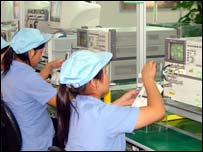
Powered by coal, gas or nuclear?

Right now for those firms, these are impossible questions to answer. And for the forseeable future, rightly or wrongly, China has no intention of decoupling economic growth from rising carbon emissions. So whatever Western firms think they're doing at the micro level to reduce carbon emissions, their reductions will quickly get overtaken by China's record-breaking coal-fuelled economic growth.

Digg Digg This! • del.icio.us Add to del.icio.us

May 7, 2026

Low Carbon Accelerator - the private equity play

Low Carbon Accelerator, the first AIM-listed private equity fund to invest in alternative energy companies, has already got quite an interesting spread of investments - 8 in total.

The one that really caught my eye was their £4.5 million investment in Proven Energy, a highly respected manufacturer and installer in small wind turbines, ranging in size from 2.5 kilowatts to 15 kilowatts. Proven wind turbines are deemed to be the most solid and reliable on the market, not least because they are "heavy metal" and therefore unlike conventional megawatt class turbines, can work in hurricane force winds. Obviously it helps the firm that they are based in Scotland, where the climate can be unforgiving and for many, electrification by the national grid is not a possibility.

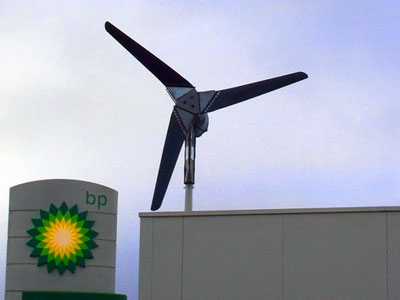
But it's the urban application that fascinates me. Here's a Proven wind turbine I drive by quite regularly on the Wandsworth Roundabout in London.

Proven wind turbine at BP gas station

I'm always drawn to look at it and I have to say, it is almost never not turning at quite a speed. I gather that BP are rolling back their solar programme for their petrol stations and using micro wind turbines where possible instead - the economics are simply much better. Small wind turbines have been bashed in the media quite a bit, but I still think that in cost, output and potential, they will still beat solar pv hands down, for some time to come.

Digg Digg This! • del.icio.us Add to del.icio.us

February 8, 2026

Econergy International acquires 50% stake in 147 MW of hydropower in Bolivia

Econergy International, has just finalised the purchase of of a 50% stake in two hydropower stations in Bolivia from Duke Energy International.

Econergy sees itself as a carbon credit generation firm. So they've got to be pleased about this. Hydropower, after all, after the enormous amounts of cement to build the dams, operates and creates vast amounts of carbon-free electricity.

Let's take a closer look at the price too - $20 million for a 50% stake 147 MW. That works out at $242,000 for each of the 73.5 megawatts. I have to say, that looks very cheap. Building a hydro plant from scratch today would typically cost $3 million per installed megawatt. Could the world's hydro assets be substantially undervalued?

On the face of it, Econergy appears to have closed a good deal.

Digg Digg This! • del.icio.us Add to del.icio.us

January 3, 2026

Econergy buys 80% stake in Brazilian wind farm

Econergy International , a clean energy and carbon developer has just bought an 80% share in a Brazilian wind project.

An interesting facet of the deal which I admire is the 20-year agreement with Electrobras, Brazil's government owned electric company, who have agreed to purchase the electricity generated by the farm. A 20 year contract for a windfarm is a very good deal. Most of the time, it is only a 15 year Power Purchase Agreement, which quite often leads to only a few lean years of profits. A 20 year contract however lengthens the time horizon for the investment return and could allow government to more easily reduce the direct subsidies to windfarms.

Time rather than technology is the key to price competitive windpower today.

Digg Digg This! • del.icio.us Add to del.icio.us

November 29, 2025

Carbon trading stocks rally on tougher EU targets

Ecosecurities is up nearly 10% on the day and Trading Emissions is up over 4%.

The reason why is that the EU is getting tough on carbon emissions for 2008-2012.

Yet the closing price of (European) carbon today is down at EUR 8.10.

This is further evidence of my view that the price of carbon is not actually all that important to alternative energy. It's just not high enough to matter. National government support systems are far more influential. But above all, the carbon price that really matters is the price of oil. No way would there have been the boom in alternative energy technologies since the beginning of the century if oil hadn't sextupled and more in price from $9 per barrel in late 1999 to around $60 today.

Digg Digg This! • del.icio.us Add to del.icio.us

November 23, 2025

Carbon stocks highly vulnerable to post 2012

As this article here indirectly suggests, there is much to fear for carbon trading companies that had previously made the assumption that it was here to stay, rise in price and become more liquid.

This may well prove to be a bridge too far . . .

Digg Digg This! • del.icio.us Add to del.icio.us

November 8, 2025

The surprising outcome of Emissions trading

When Europe started its Emissions Trading Scheme, as a follow-on from the Kyoto clean development mechanism, it was assumed that a lot of the clean energy investment would take place in Europe. What no one anticipated was that virtually all of the clean offset investments took place in the developing world.

And so to China, where according to Camco International the Jinan Iron and Steel Group Corp of China has agreed to sell about 12.3 million metric tons of emission credits generated by a project to capture and use greenhouse gases from the steelworks.

At current European spot carbon prices (the world's highest at around EUR 9.40 per ton), that's worth about $146m.

Also, take a look at the spike in the price of Camco's stock on the 12 month chart that happened at the end of October. That's because of the publication of the Stern Review of the Economics of Climate Change on 30th October - which argued that the right price for carbon was $85 a ton, a good nine times higher than it is now. Highly improbable if you ask me, but you can see why investors would be encouraged to hold stocks that are involved in carbon trading.

Digg Digg This! • del.icio.us Add to del.icio.us

September 27, 2026

Trading methane, not just carbon

The big picture greenhouse gas that everyone is aware of is carbon dioxide. Yet carbon trading companies are also eyeing up the potential of methane - 23 times or so more potent than CO2 and presumably, 23 times more valuable.

The coal industry has also noticed - coal and methane occur naturally together. Companies like Alkane Energy have a head start.

According to Evan Evans, vice president and director of engineering for the Boulder, Colo.-based Econergy International Corp, there may be ". . . an opportunity in Wyoming to generate new revenue streams in a carbon trading regime".

Digg Digg This! • del.icio.us Add to del.icio.us

July 27, 2026

Ecosecurities and the price of carbon

Ecosecurities closed up yesterday at 153p.

The company founded in 1997 has a relatively long history in the carbon marketplace. And they claim to use the widest range of integrated carbon finance tools, from advisory services to carbon project sourcing and development, from transactional and financial solutions to carbon credit trading.

For carbon trading to become the massive market some people think it can, the price of carbon has to become as well known as the price of oil. It also has to price much higher - yesterday the price closed at EUR 16.60 per metric tonne.

Digg Digg This! • del.icio.us Add to del.icio.us

July 17, 2026

Emissions Trading coming in for a rough ride

There's a lot of disquiet about emissions trading in Europe right now - the world's biggest carbon market.

Clearly, not everyone buys into the idea that this price signal will deliver the intended consequence of pricing in cleaner or rather low carbon energy technologies. Yet any price signal - where before there was none - always influences behaviour. Perhaps the greatest challenge for the carbon markets is to price out much further into the future.

AEI readers may be interested to read my interview with Dr Richard Sandor, who invented carbon trading. In this he explains the scheme and expresses high hopes that if the system is designed effectively, this market could be worth trillions of dollars.

Digg Digg This! • del.icio.us Add to del.icio.us

E-mail Sign-up

Fill out the form below to receive the fornightly review AEI newsletter.

First Name
Last Name
E-mail